New standards in longevity medicine
The people and initiatives shaping the field, and what it takes to bring emerging standards into clinical practice
At a Glance
The society
Healthy Longevity Medicine Society
The curriculum
NUS Academy: Intensive Course, Graduate Certificate, Masterclass
Tel Aviv University: Healthspan Medicine CME
The roundtable
International Institute of Longevity with the Buck Institute
The market layer
Longevity.Technology and Longevity Clinics World
Nobody can tell you how many longevity clinics exist. Published estimates run from a curated directory of a few hundred worldwide to market-research figures in the thousands, because there is no agreed definition of what makes a clinic a longevity clinic.
What the field does have is surveys. In the Longevity Clinics Survey 2025, published by Longevity.Technology and covered by MIT Technology Review in April 2025, 82 clinics across multiple continents reported their practice. More than a third offered stem cell treatments, for which there is no clinical evidence of a clear benefit. Most were prescribing medicines off label for aging. In a separate survey of 22 clinics across Europe, North America, the Middle East and Asia-Pacific, run by the International Institute of Longevity between October 2025 and January 2026, 86% already use biological age assessments and 100% plan to expand services or geography in the near term.
Those numbers describe the position the field is in. Adoption has outrun validation, and the people best placed to notice are the ones now doing something about it.
Marco Demaria put the diagnosis on the record in Aging in 2025, in an editorial titled “Longevity clinics: between promise and peril.” He credits the clinics with things academic medicine cannot do: they follow clients over years and collect deep phenotypic data, they turn patients into active participants, and they adopt new diagnostics faster than universities or hospitals can. Then he names the cost. “It is not unusual for clinics to adopt unproven or risky therapies.” “In too many cases, commercial incentives overcome scientific rationale.” And the structural point that matters most for anyone building in this space: “most clinics are pretty much disconnected from academic geroscience and from clinical geriatrics.”
Professor Andrea Maier, who contributed to the 82-clinic survey, made the same observation: “Many clinics offer peptide and stem cell therapies without clear healthy aging related indications.” Cognitive assessment, one of the cheapest and best-validated things a longevity clinic can do, appears in fewer than 60% of them.
Four separate efforts are now converging on this gap. They are worth knowing individually, because they are covering different angles.
The society: HLMS is promoting the highest standards of clinical practice
The Healthy Longevity Medicine Society (HLMS) was founded in August 2022 with a mission: “To develop longevity medicine as a respected and independent medical speciality that extends the healthspan of aging individuals.” Its four stated objectives are educational pathways including accreditations, professional standards and physician guidelines, a centralized clinical research agenda, and partnerships with health authorities and scientific bodies.
The council carries the field's clinical and geroscience weight. Evelyne Bischof, Medical Director at the Sheba Longevity Center and Professor of Medicine at Shanghai University of Medicine and Health Sciences, serves as President. James L. Kirkland, President of the American Federation for Aging Research and Director of the Center for Advanced Gerotherapeutics at Cedars-Sinai, is Vice President. Nicole Sirotin, Chair of Preventive Medicine in the Medical Subspecialties Institute at Cleveland Clinic Abu Dhabi, is Secretary General. Andrea Maier, founding President. With Nir Barzilai, Thomas Rando and Harold Pincus on the council.
The Longevity Education Hub stands behind the Longevity Medicine 101 and 201 curriculum, built by physicians, academic biogerontologists and computer scientists, delivered online, free of charge, and certified by the American Council for Continuing Medical Education. The 101 course gives an evidence-based overview of the biological, psychological and technological sides of aging and was rewritten in 2025 to keep pace with geroscience. The 201 course goes into theories of aging, biomarkers, molecular mechanisms and geroprotector regimens, and trains physicians to judge the validity of biological age testing systems they are being sold. More than 20,000 physicians have been verified through it, and the curriculum is implemented in five universities in five countries. HLMS co-created the standards for Healthy Longevity Medicine Centres and is now working on education standards.
In March 2026, JMIR Medical Education published what these courses changed in practices. Professor Bischof, Wilczok, Kirkland and co-authors surveyed physicians across 42 countries who had completed the accredited courses. 55.8% now apply healthy longevity principles in routine assessment for every patient, 23% started aging biomarker testing, 48.7% test more frequently than before, and 73.5% expect the field to be absorbed into mainstream medicine. The authors state the limit as clearly as the result: “systemic health care barriers impede widespread implementation.”
The curriculum: operationalizing the definition
A field acquires a standard the moment somebody has to teach it, because a curriculum forces every vague claim into a syllabus line with an assessment attached.
Andrea Maier co-founded the NUS Academy for Healthy Longevity at the National University of Singapore in 2023 to build this structure. Its Healthy Longevity Intensive Course runs every year, led by Prof. Andrea Maier alongside Prof. Hans Meij. It covers diagnostics and biomarkers of aging, specialised areas including cardiology and women's reproductive health, and the systemic assessments in use in longevity clinics today.
Since then the Academy has extended the teachings into two additional tracks: The Graduate Certificate in Healthy Longevity Medicine and Healthy Longevity Masterclass.
The Graduate Certificate in Healthy Longevity Medicine took its first cohort in August 2026: the first postgraduate programme anywhere to put geroscience and precision geromedicine in one curriculum. It runs as a semester, an intensive week in Singapore in August, online teaching until the end of November, a second intensive week in December, and it is built as three connected courses. Foundations covers the hallmarks of aging, life course epidemiology and global policy frameworks. Gerodiagnostics covers physiological, molecular and digital biomarkers, biological age and aging clocks, multi-omics and AI, wearables, and the translation of all of it into clinical and public health practice. Gerointerventions cover lifestyle, cognitive and environmental optimisation, nutraceuticals, pharmacological and emerging gerotherapeutics, multimodal protocols matched to gerodiagnostics, and the regulatory obstacles to using any of them. Assessment runs through examinations, oral presentations and written assignments, and the certificate carries 12 modular credits that stack towards a 40-credit Master in Healthy Longevity, with specialisations in geroscience and precision geromedicine.
The NUS Healthy Longevity Masterclass runs between 16 to 18 November 2026 on campus, taught by Prof. Andrea Maier, Prof. Hans Meij and Michael Dunn of the Centre for Biomedical Ethics, for C-suite executives and board members from healthcare systems, MedTech, insurance and financial services, consumer goods, real estate, government and private equity, with a minimum of ten years' professional experience and no scientific background required. Participants go through a clinical assessment panel run by the Academy's Clinical Trial Centre, covering circulatory fitness, muscle strength, body composition and skin health, and leave with a personal longevity dashboard built on their own data. The programme materials draw the line themselves: “This is not a wellness retreat. It is a substantive academic experience, grounded in live clinical data.” The stated aim for the participants is to “build the literacy to evaluate longevity claims critically” before allocating capital, designing products or setting workforce strategy around them.
The Academy backed the teaching with infrastructure. In October 2025 NUS Medicine opened its 350 square metre Clinical Trial Centre for precision geromedicine. One trial running there, PROMETHEUS, took a Milestone 1 semi-finalist award in XPRIZE Healthspan. On 11 August 2026 the NUS Academy for Healthy Longevity was named among the 20 finalist teams in the $101 million competition, which requires teams to restore muscle, cognitive and immune function by at least ten years in adults aged 50 to 90, within one year of treatment, with trials running to 2030 under a Data Coordinating Center at the University of Utah and shared biomarker labs coordinated by UC San Diego.
In Israel, the Gray Faculty of Medical and Health Sciences at Tel Aviv University runs a CME course in Healthy Longevity Science and Healthspan Medicine directed by Prof. Tzipi Strauss and Prof. Evelyne Bischof, both of Sheba Medical Center. Ten bi-weekly sessions run from 2 November 2026 to 8 March 2027, open to physicians from all specialties who already hold Longevity Education 101 and 201 certification, with 75% attendance and a final exam required for the certificate. The syllabus moves from the biology of aging and biological age measurement through cardiometabolic longevity, nutrition and repurposed drugs, sleep and circadian biology, hormones, neuro-longevity and inflammaging, and closes on “Technology, AI, and Integration for Healthspan.” The stated aim is to move practitioners “from reactive disease management to preventive, personalized, and data-driven healthcare.”
Alongside the courses, the reference literature was published. David Barzilai, Harvard Medical School lecturer and founding faculty member of the Geneva College of Longevity Science, co-edited Frontiers of Longevity Science for Springer Nature with Max Rangeley, Regina Monaco and David Wood: three volumes, 1,600 pages, more than 100 contributors, covering the biology of life extension, the technology, and the ethics and governance.
The roundtable: defining the gold standard
The Roundtable of Longevity Clinics, run by the International Institute of Longevity (IIOL) with the Buck Institute for Research on Aging as scientific partner, states the problem in its own materials: “there are currently no established gold standards for these practices.” Its goal follows: “Our goal is to convene experts and facilitate discussions on defining these standards, as well as identifying effective diagnostics & recommendations for longevity-focused interventions, supplements, and therapies.”
Joanna Bensz, founder and CEO of IIOL, and Eric Verdin, CEO of the Buck Institute will co-host the event. The advisory board includes Andrea Maier, William Kapp, David Karow and Evelyne Bischof. Editions ran at the Buck Institute in Novato, California in 2023, 2024 and 2025, each producing a white paper of expert discussions and recommendations. The fourth edition runs 17 to 18 October 2026, for around 250 clinic leaders, physicians and suppliers, with sessions on epigenetic case studies, biomarkers, supplementation, clinic profitability, XPRIZE Healthspan with Jamie Justice, and AI in clinical practice.
The market layer: visibility, benchmarking, and the road to accreditation
In May 2026, IIOL and the Longevity Think Tank published Longevity clinics at an inflection point: from expansion to accountability. Joanna Bensz summarised it in one line: “The sector is no longer defined by what clinics can offer, but by what they can prove.” The report identifies a structural paradox, with clinical practice running ahead of validated frameworks, and names the two biggest barriers to scaling quality care as lack of standardization and a shortage of trained practitioners.
In August 2026 HLMS and Longevity Clinics World, the global clinic directory led by Manjit Sareen under Phil Newman's Longevity.Technology, signed a Memorandum of Understanding. It sets up joint working groups on evidence and quality, clinic visibility, and education, with annual reviews and phased governance. The stated destination is “accreditation readiness,” with any real accreditation requiring separate governance and independent oversight.
Phil Newman: “The healthy longevity clinics sector needs standards, not slogans. That's what builds trust.”
Manjit Sareen says: “Healthy longevity clinics are on the front line of bringing healthy longevity to people. Partnering with HLMS lets us build transparency and consistency across the sector.”
Prof. Andrea Maier framed why a scientific society should sit at that table: internationally recognized frameworks create the conditions in which innovation can be evaluated properly, implemented responsibly, and translated into patient outcomes.
The calendar: how fast this is moving
Karl Pfleger has tracked the field's infrastructure at AgingBiotech.info since 2019, and his conference table tracks the most important events. It currently lists 37 aging and longevity conferences in 2026: fourteen held between January and June, and twenty-three more scheduled between mid-August and the end of December.
The Biomarkers of Aging Conference now exists as a standalone annual meeting, which means the measurement problem has its own venue and its own community. And a longevity clinics roundtable, a translational summit, an investor partnering forum and a medical AI conference now take place in the same three weeks as the core academic meetings. Research, clinical practice, capital and tooling start converging.
The measurement problem
The Biomarkers of Aging Consortium, writing in Cell in 2023, stated that the field has no formally validated surrogate endpoint biomarkers of aging, and flagged the technical noise carried by individual DNA methylation measurements. Work through 2025 and 2026 has sharpened this: across four independent datasets, epigenetic clocks reproduce well on technical replicates, which locates the constraint in biological within-person reliability over short intervals. Different clocks are built for different purposes, and they disagree with each other on the same person. Espinoza, a geriatrician at Cedars-Sinai, on the clinical use of clocks: “There isn't a lot of evidence yet that an epigenetic or biological age clock is something we should be following clinically.”
Marco Demaria's recommendations are the practical ones. Clinic data should be standardized, anonymized and shared with academic consortia. Interventions should run as pragmatic clinical trials with outcomes published. And the field needs “an agreement on metrics, biomarker panels, and reporting frameworks,” because data collected in incompatible formats cannot be compared.
That is a standards problem for the societies, and a data engineering problem for everyone else.
The LongevAI vision
We build LongevOS, the clinical operating system for longevity and preventive health.
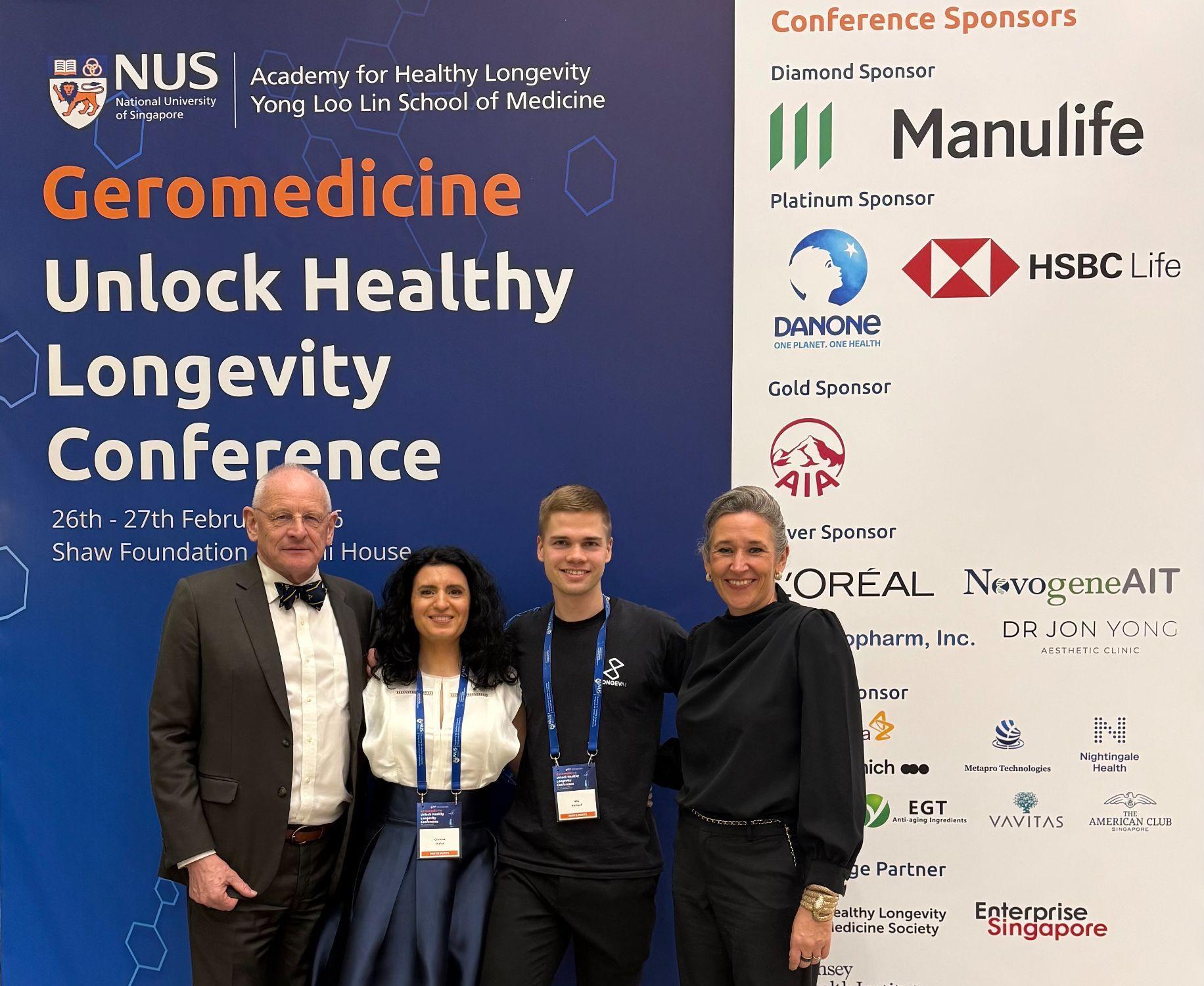
We joined the HLMS network, completed its courses, attended the Unlock Healthy Longevity conference in Singapore this year and will attend the Roundtable of Longevity Clinics in October.
Every effort described above culminates with operationalization and standard tools for daily use in practice. A biomarker panel can be interpreted in context when a lab report in any format and any language can be made available in a system that extracts the values, normalizes the units, and maps them to the ranges that the clinic uses. The personalization framework is useful when a system connects all contexts to generate the reports in a structure useful to the clinician. Outcome measurements are tracked across visits for years, can be analyzed and important insights are depicted.
LongevOS is built around configuration. The platform does not impose how a clinic should practice. Each clinic defines its own health domains, reference ranges, intervention library with the selection logic written in plain language, its own report structure and clinical tone, without writing code. We don’t impose opinionated weighting on health domain scores for a specific reason: longevity guidance is not harmonised and it moves as the science moves, so the weighting belongs to the clinics now.
This design decision makes the standards easy to adopt as they get defined. When the various working groups mentioned in this article agree on eligibility criteria and standards, a clinic running an encoded methodology adopts them by editing the system configuration themselves. Reference ranges, domains, intervention criteria and report structure are fields in the system, and each clinic decides how to adjust them.
AI-generated content doesn't reach a client without explicit clinician approval, with version control on every change and an audit trail across event types. Client data is encrypted per organization, hosted in the clinic's chosen region, anonymized before any AI processing, and never used to train models.
An invitation
The field is writing its rules in societies, curricula, white papers and working groups. Standards written by clinicians and scientists need operational tools.
If you are working on standards, methodology or measurement in healthy longevity, and want to talk about how the delivery side should work, reach out to me directly. If you want to contribute to any of the initiatives in this article, reach out to the leaders named above.
Cosmina Druica, cosmina@longevai.nl
Sources
- Healthy Longevity Medicine Society
- NUS Academy for Healthy Longevity, Healthy Longevity courses
- Graduate Certificate in Healthy Longevity Medicine, NUS Medicine
- NUS Healthy Longevity Masterclass, NUS Medicine
- Healthy Longevity Intensive Course, NUS Medicine
- Tel Aviv University CME, Healthy Longevity Science & Healthspan Medicine
- Roundtable of Longevity Clinics, IIOL and the Buck Institute
- HLMS and Longevity Clinics World MOU
- Longevity clinics at an inflection point: from expansion to accountability, IIOL and Longevity Think Tank
- Demaria M. “Longevity clinics: between promise and peril.” Aging (Albany NY) 2025;17(10):2452–2454
- Global Survey on Health, Wellness and Longevity Clinics, International Institute of Longevity and Longevity Think Tank, May 2026
- Longevity Clinics Survey 2025, Longevity.Technology, covered in MIT Technology Review
- Biomarkers of Aging Consortium, “Biomarkers of aging for the identification and evaluation of longevity interventions,” Cell 2023
- Frontiers of Longevity Science, Springer Nature
- XPRIZE Healthspan