Human Longevity, Inc.: Inside the South San Francisco Clinic
How the clinic J. Craig Venter co-founded in 2013 runs an assessment day of whole-body MRI, cardiac imaging, and whole genome sequencing in a private client room.

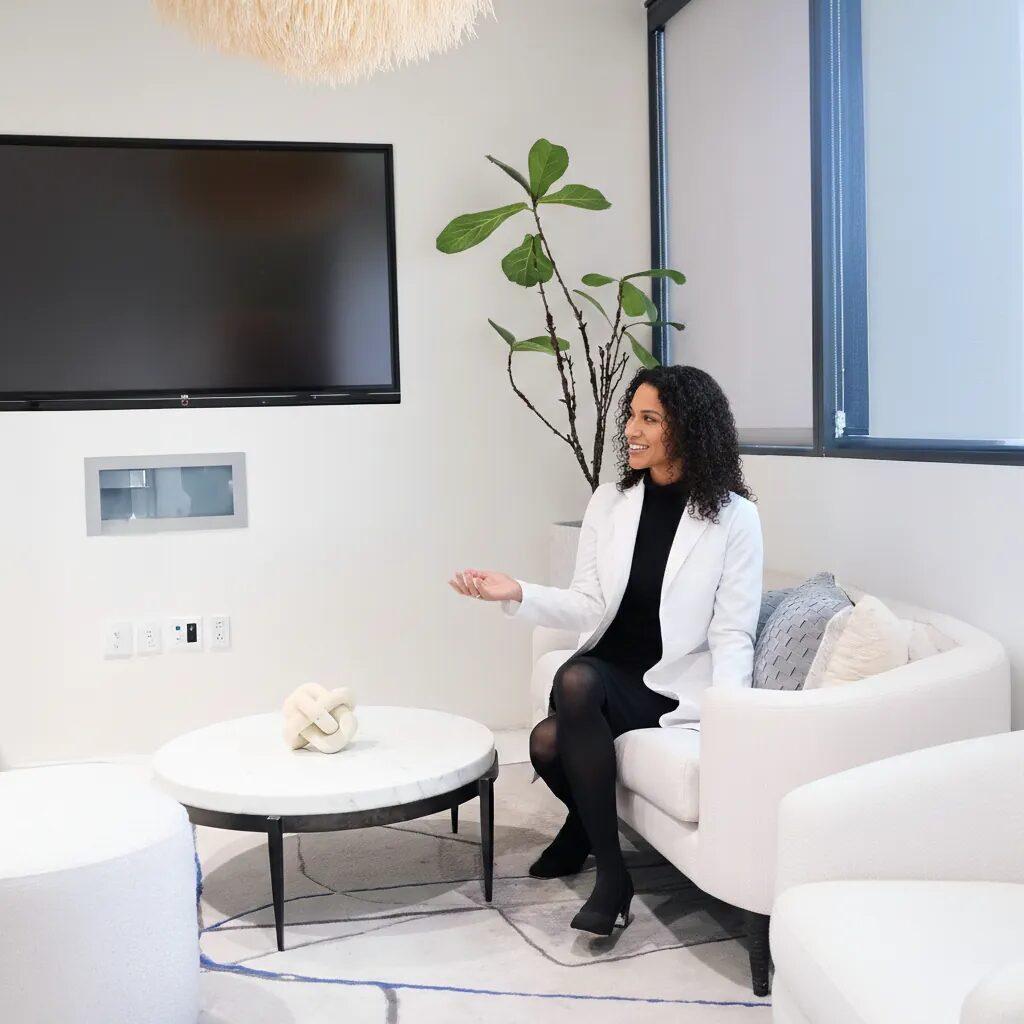
On 20 October 2026, Elio Verhoef, CTO of LongevAI, and Cosmina Druica, CEO, visited Human Longevity's clinic at 600 Gateway Blvd, Suite 101, in South San Francisco, a few minutes from San Francisco International Airport. The clinic team showed us around.
J. Craig Venter, Peter Diamandis and Robert Hariri founded Human Longevity, Inc. in 2013. Venter, who led one of the first efforts to sequence the human genome, died on 29 April 2026. Wei-Wu He has been Executive Chairman since July 2019.
Clinic Snapshot
The company runs two clinics in California. The flagship in San Diego, at 4570 Executive Drive, Suite 100, opened in 2015. The South San Francisco clinic opened in 2022, together with the company's headquarters, in South San Francisco's biotech corridor.
The South San Francisco clinic has six private client rooms, set up like hotel rooms. The clinic sees about four or five clients a day. The assessment day takes five to six hours, and the physician, medical assistant and technicians come to the client's room. Breakfast and lunch are served there.
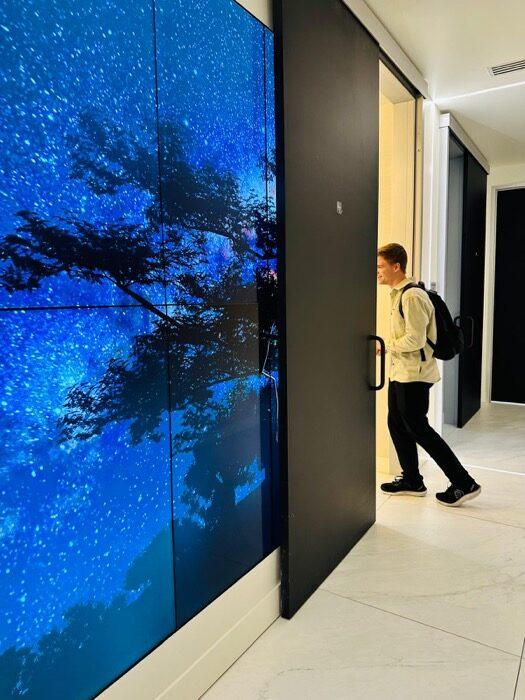
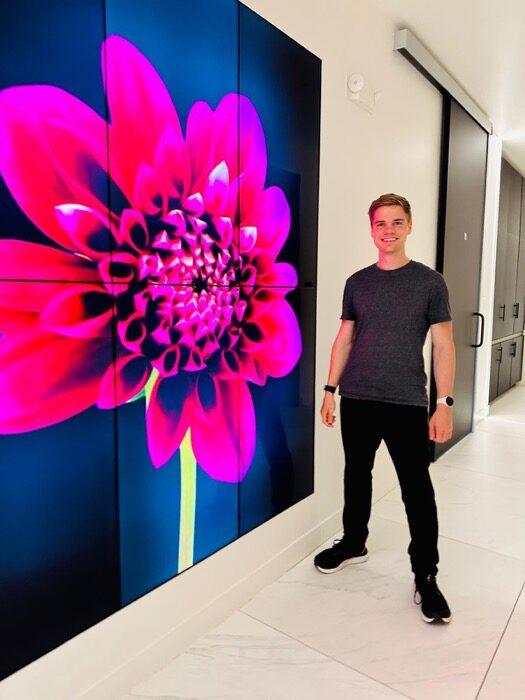
Elio Verhoef during our visit to Human Longevity's South San Francisco clinic.
Philosophy and Differentiation
The clinic organises its assessment around what it calls the Four Threats: cardiovascular disease, cancer, metabolic disease and neurodegeneration. Its stated aim is early detection across more than 1,000 conditions, before symptoms appear.
The three programs are annual memberships. Executive Health is for people under 65; people of 65 and older join a 100+ program. 100+ Care adds continuous monitoring and more follow-ups through the year, and 100+ Concierge adds a dedicated concierge physician. Genomics for All is a separate one-time whole genome sequencing test at $599. Ordered online, it comes as an at-home saliva kit with results in six to eight weeks.
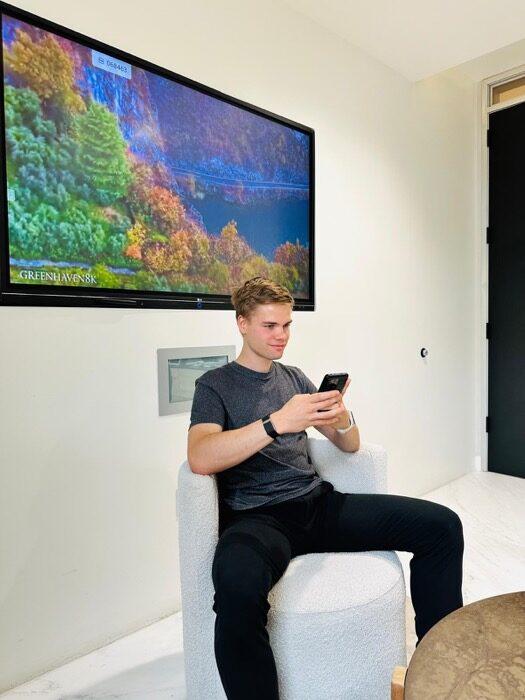
Elio Verhoef during our visit to Human Longevity's South San Francisco clinic.
Diagnostics and Personalization
Before the assessment day, the client has two physician appointments of 40 to 60 minutes, covering health background and family history. The physician then orders tests per person. Someone who had a DEXA scan or a lung CT in the past year may skip it this year. Clients can upload records from earlier hospitals or laboratories through the app, so the physician can compare year on year.
On site we saw a whole-body MRI, which takes about an hour, with music and calming visuals. Breast imaging is separate, because of the positioning. Also on site: an echocardiogram, a DEXA scan, an electrocardiogram, body composition measurement, mammography, and a blood draw, with samples collected by Quest each day. A therapeutic plasma exchange machine is in the clinic and is used only on a physician's order. GRAIL's Galleri multi-cancer early detection test is recommended as an add-on and is part of 100+ Concierge. Cleerly coronary plaque analysis is available on site.
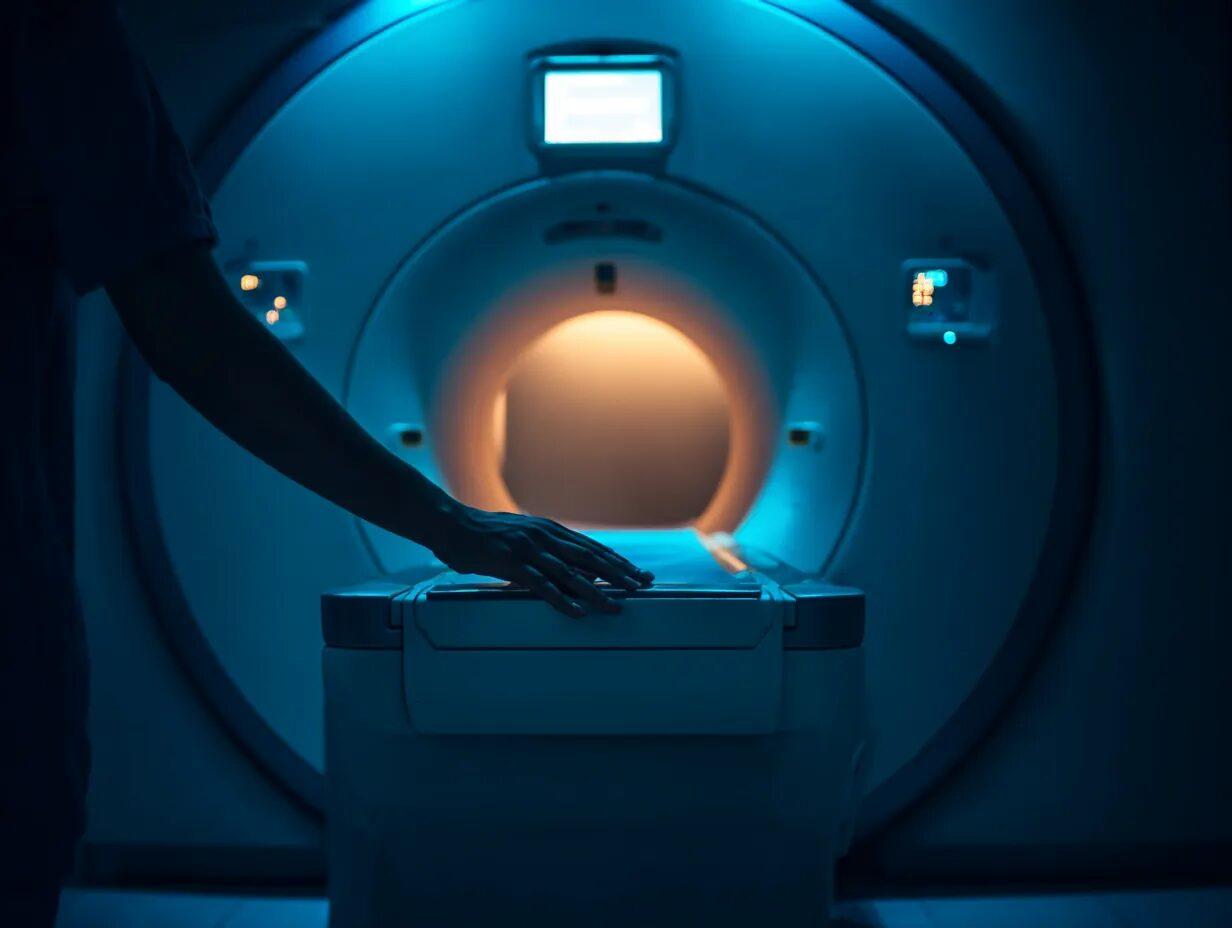
The MRI scanner at a Human Longevity clinic. Image: Human Longevity, Inc.
After testing, Executive Health includes two follow-ups, one for the laboratory and imaging results and one for the genomics. The 100+ programs add follow-ups at six and nine months. Each client has a dedicated Human Longevity physician. Cardiology, oncology and dermatology outside the clinic are reached by referral.
What makes it unique compared with other clinics
The whole-body MRI, the cardiac testing, the blood draw and the genome sample all happen in the same building as the physician, on one day, with the client in one room while the staff moves between rooms. Human Longevity describes its San Diego clinic, opened in 2015, as the first to offer whole-body MRI, genome sequencing and deep biomarker analysis in a single visit. It reports more than 10,000 clients served. Executive Health is backed by a $1 million Cancer Prevention Pledge: if a member develops late-stage cancer while under its care, the company contributes up to $1,000,000 toward treatment.
The member app, myHealth, holds the results and documents, and it includes Longevity AI. A client can ask a question in any language months after the physician explained the results, for example what their genetic risk for Alzheimer's disease is. The genome pipeline dates from the Venter years. The interpretation is updated as new studies appear, and the raw data stays the same.
The $599 Genomics for All test reads all 6.4 billion base pairs. The report covers hereditary disease risk, such as BRCA1, BRCA2 and APOE status, carrier status, pharmacogenomics for more than two hundred medications, polygenic risk and traits, with a year of access to the Longevity AI app. In the clinic the sample is a cheek swab, taken after an hour without food, and results come back in four to six weeks. Elio ordered his own whole genome test during the visit.
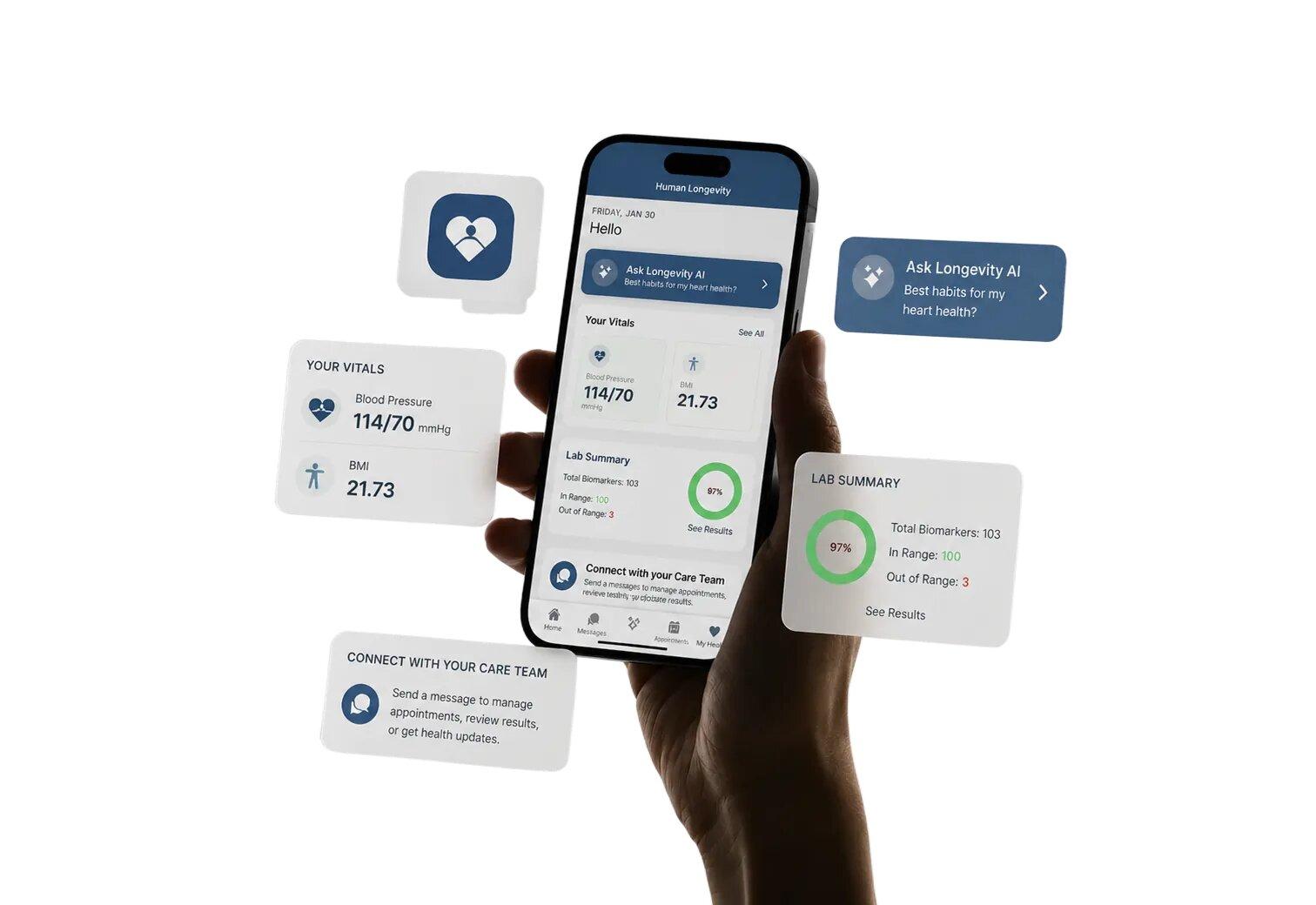
The member app, with results and Longevity AI. Image: Human Longevity, Inc.
The Road Ahead
A genome does not change, and a scan from last year is already a comparison point. The clinics that collect both, and keep them attached to one physician across years, end up with a record that gets more useful each visit.
Human Longevity's leadership describes where it wants that record to go: one place that holds a person's genome, imaging and years of examinations, and answers questions about them.
“Everyone should have something like a personal ChatGPT with all of their own data behind it: genome, proteomics, imaging, annual examinations, and 10 or 20 years of history.”
How We Support Clinics Like Human Longevity
Human Longevity's work spans whole-body imaging, genomics and blood markers, read together by one physician and followed across years. That combination requires tools that can hold each client's data over time.
We built LongevOS to solve this challenge: it pulls in biomarker data, tracks changes across visits, and helps clinical teams turn complex health profiles into clear, actionable plans that update as new data comes in.